Data cleansing & management involves correcting, standardizing, enriching, and validating data to ensure accuracy and usability across business systems. This process improves data quality, supports automation, enhances customer insights, and prevents costly operational errors.
At Depends IT, we combine advanced tools with manual verification to deliver reliable, high-quality data that keeps your systems running smoothly.
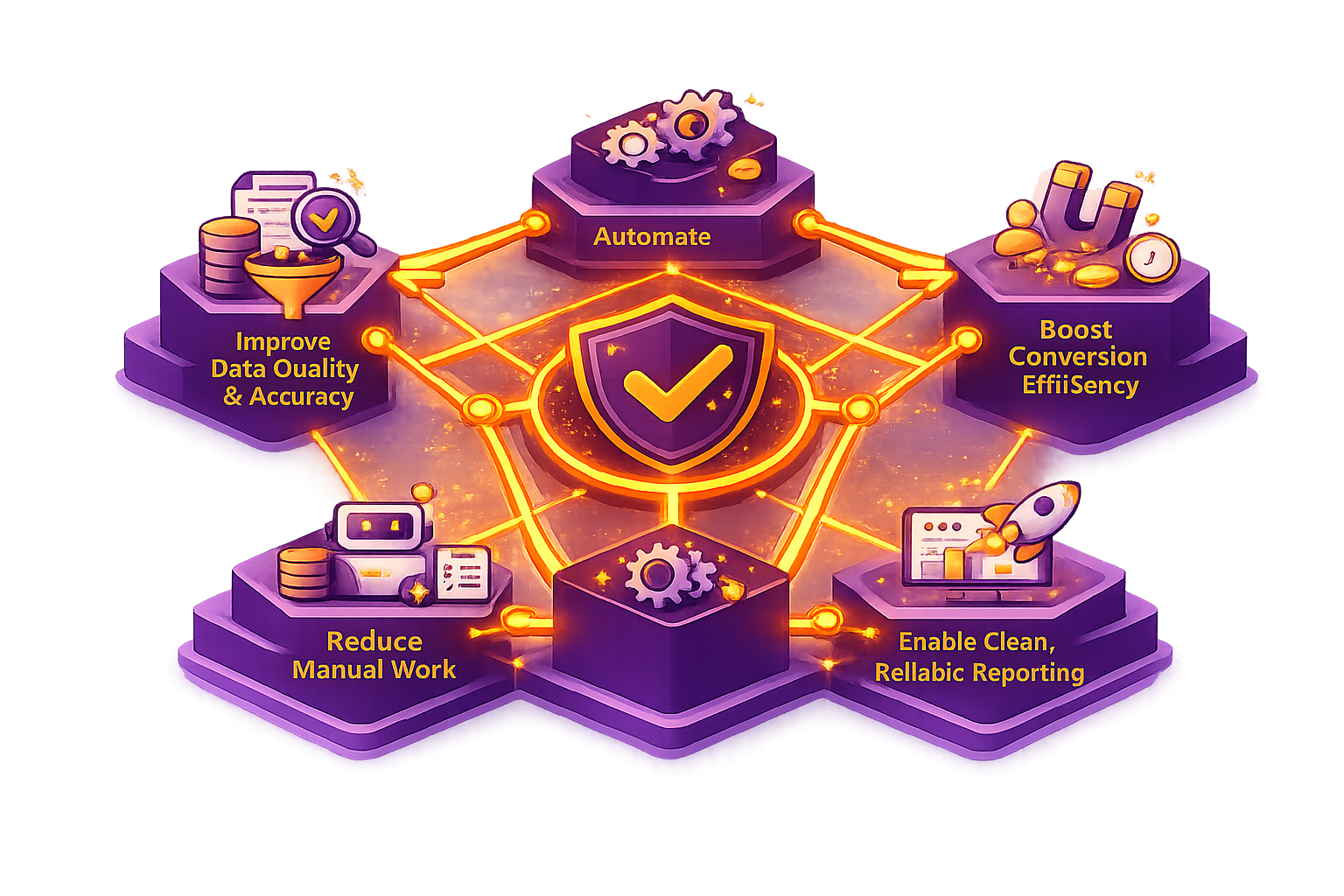
Remove errors, outdated entries, and inconsistencies to improve overall data quality.
Identify and remove duplicate records across databases for clean, unified datasets.
Standardize data structures, formats, and fields for better consistency and usability.
Validate information across multiple sources to ensure accuracy and reliability.
Add missing fields and enhance records to strengthen customer and business datasets.
Conduct full data health audits to identify gaps, errors, and improvement opportunities.
Normalize formats, naming conventions, and fields for consistent dataset structure.
Analyze datasets to uncover patterns, gaps, and inconsistencies before optimization.
Verify and correct physical address data to prevent delivery errors and inaccuracies.
Clean and validate email lists to reduce bounces and improve campaign performance.
Confirm business names, roles, phone numbers, and contact details for accuracy.
Clean and standardize master records for customers, products, vendors, and partners.
Ensure data alignment across systems for error-free reporting and operations.
Clean CRM records to improve targeting, segmentation, and sales productivity.
Add missing lead information to improve qualification and campaign performance.
Support MDM workflows to maintain high data quality across enterprise systems.
Clean, merge, and organize customer records into a unified customer profile.
Maintain email list cleanliness by regularly removing invalid and inactive contacts.
Maintain, organize, and update address data for logistics, billing, and communication.
Add missing fields such as phone numbers, emails, and demographic details.
Add verified email addresses to existing customer or lead records.
Build structured catalogs with indexed product or service data for easy navigation.
Extract and analyze CRM data to identify patterns, trends, and actionable insights.
Create data policies, standards, and documentation for long-term data integrity.